Metal braces or self-ligating braces – which should you choose as an adult?
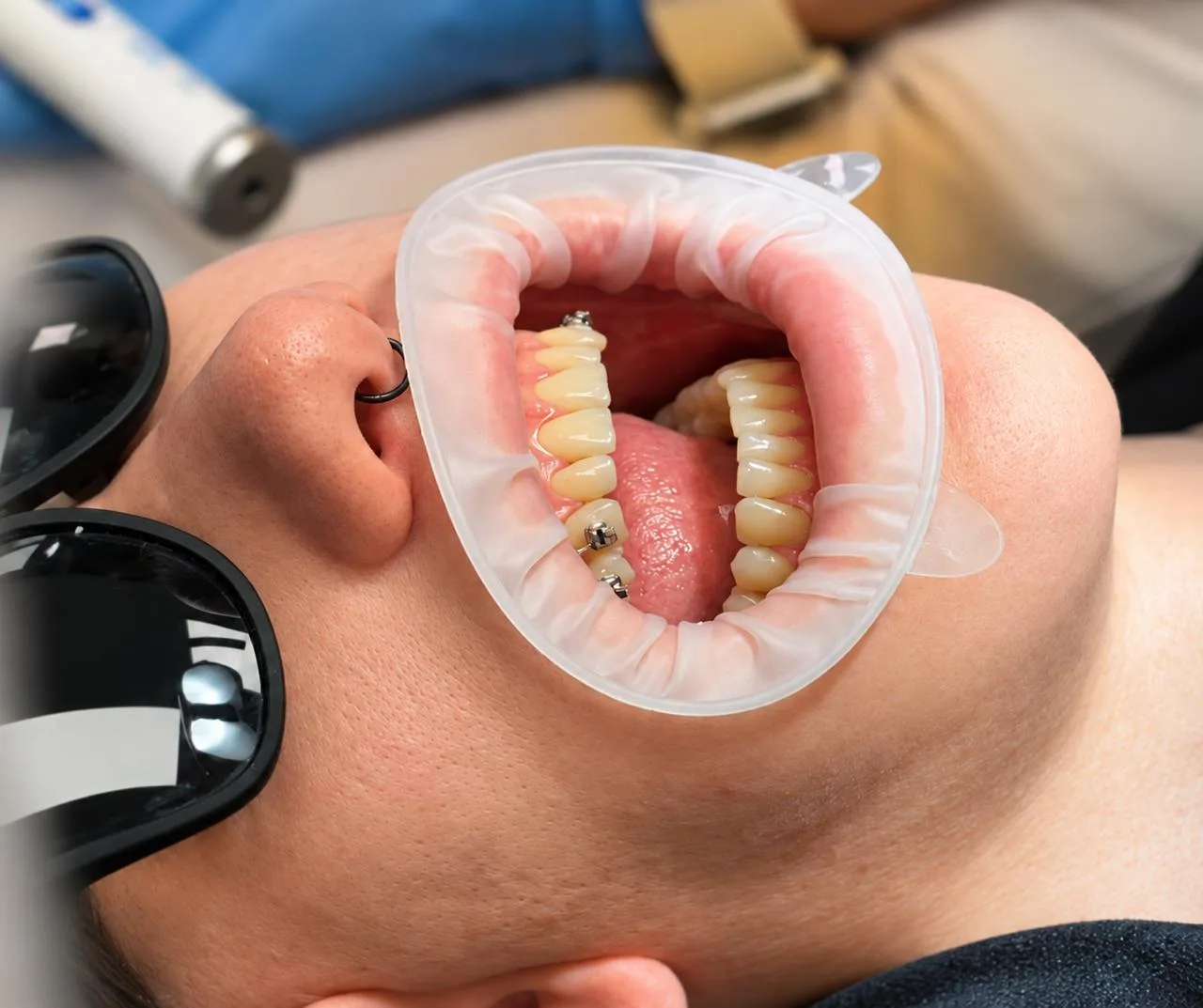
Metal braces or self-ligating braces? Both are fixed braces that move teeth in the same way and, according to research, give similar treatment results. They differ in how the wire is attached to the brackets: in conventional braces it is held by small elastic or wire ties (ligatures), in self-ligating braces by a built-in door. This leads to small differences in hygiene, appearance, check-up visits and price.
Adult patients often ask us whether self-ligating braces are worth the extra cost. Adverts say they "work faster" and "hurt less". Below we explain how these braces really differ, what studies say and when each choice may make more sense.
Metal braces and self-ligating braces – what is the difference?
All fixed braces have the same basic parts: brackets bonded to the teeth and an archwire, a springy wire that runs through all the brackets. The wire applies steady, gentle pressure, and the bone around the roots gradually remodels, which lets the teeth move.
The difference is in one detail: how the wire is held in the bracket.
- Conventional metal braces have brackets with small "wings". The wire is tied to them with ligatures: small elastic rings or a thin steel wire. Ligatures are usually replaced at check-ups.
- Self-ligating braces have a built-in door or clip in each bracket that locks the wire in. No ligatures are needed. To change the wire, the dentist opens the door with a special instrument and then closes it.
What actually moves the teeth – the wire, the treatment plan and the dentist's experience – is the same in both cases.
Conventional metal braces – advantages and limitations
Conventional metal braces have been used for decades and are well understood. They work for most bite problems, including complex ones.
Advantages:
- they are usually the least expensive fixed braces,
- metal brackets are durable and rarely break,
- ligatures give the dentist a simple way to pull the wire into a particular tooth,
- coloured ties can be a plus for people who see braces as part of their look.
Limitations:
- elastic ties collect plaque, so you have to brush especially carefully around the brackets,
- clear ties can stain, for example from coffee, tea or spices, and look less neat until they are replaced,
- ties lose their elasticity over time, so they are changed at check-ups.
Self-ligating braces – advantages and limitations
In self-ligating braces the wire is locked into the bracket by a door. At LumiDent we use Damon Q metal self-ligating braces and ceramic self-ligating braces. Why our orthodontist chooses Ormco brackets is explained in the article Damon Q braces – why I choose them.
Advantages:
- without elastic ties there are fewer places for plaque to build up, which may make hygiene easier,
- there are no ties to stain between visits,
- a wire change can be a little quicker, because the dentist only opens and closes the doors,
- in laboratory tests the wire slides through these brackets with less friction, although it is not clear how much this matters in actual treatment.
Limitations:
- they cost more than conventional metal braces,
- the metal version is about as visible as conventional braces; only the ceramic version is more discreet,
- "no elastics" does not mean no elastics at all: for some bite problems the dentist still uses elastic bands or chains.
Self-ligating or conventional braces – what does the research say?
Self-ligating braces are sometimes advertised as faster, less painful and needing fewer visits. Independent reviews of clinical studies, however, do not confirm a clear advantage for either system.
- Treatment time and number of visits. Systematic reviews found no significant difference in total treatment time or number of visits. How long treatment takes depends mainly on the type of problem, the treatment plan and regular check-ups.
- Pain. The review by Fleming and Johal (Angle Orthodontist, 2010) found no significant advantage for either type of braces in reported pain. Tender teeth in the first days are typical with both.
- How well teeth are straightened. The speed of correcting crowding was similar in studies.
- Gums and plaque. A 2022 review (J Clin Med) found slightly less plaque with self-ligating brackets, but no difference in gum inflammation or bleeding. The authors concluded that self-ligating braces are not better than conventional ones in this respect.
For patients the conclusion is simple: the choice of brackets is not the most important decision in orthodontic treatment. An accurate diagnosis, a well-planned treatment and your daily hygiene matter more.
Metal braces or self-ligating braces – comparison table
| Conventional metal braces | Self-ligating braces | |
|---|---|---|
| How the wire is held | Ligatures: elastic or wire ties | Door built into the bracket |
| Treatment effectiveness | Similar in studies | Similar in studies |
| Treatment time | Depends on the problem, not the bracket type | Depends on the problem, not the bracket type |
| Pain in the first days | Usual tenderness | Usual tenderness, no significant difference |
| Hygiene | Elastic ties make plaque build-up easier | Slightly less plaque without ties |
| Appearance | Metal; ties may stain | Metal without ties, or a ceramic version |
| Check-ups | Usually every 4–8 weeks, ligatures replaced | Usually every 4–8 weeks, doors opened |
| Price | Lower | Higher |
Current prices for both types of braces, ceramic braces and check-ups are on the page orthodontics at LumiDent – fixed braces and aligners.
Fixed braces for adults – what to keep in mind whatever the bracket type
Treatment with fixed braces is entirely possible for adults, but a few things need more attention than in teenagers:
- Healthy gums and bone. Moving teeth while gum disease is active can make bone loss worse. That is why the dentist assesses the gums before fitting braces, and gum disease is treated first. With very thin gums or exposed necks of teeth, the risk of recession is assessed too – more in the article Can receding gums be reversed?
- Previous dental work. Adults often have fillings, crowns or missing teeth. The dentist takes this into account when planning, and sometimes orthodontic treatment is a step in preparing for implants or prosthetics.
- Hygiene. Any fixed braces need thorough brushing, interdental brushes and regular professional teeth cleaning. It is also worth having one before the braces are fitted.
- Appearance at work. If metal braces are a problem for you, ask about the ceramic version or aligners. In that case appearance, not the way the wire is held, becomes the key factor.
- Retention. After the braces come off you need a retainer, often for many years.
When might each type of fixed braces make more sense?
The final decision is made by the dentist after an examination, but in general:
Conventional metal braces may be a good choice if:
- the cost of treatment matters most to you,
- you do not mind that the braces are visible,
- you can keep up good hygiene around the elastic ties.
Self-ligating braces may make more sense if:
- you want fewer hard-to-clean spots around the brackets,
- you do not want stained ties to spoil the look of the braces,
- you are thinking of tooth-coloured ceramic braces – at LumiDent they are available as self-ligating braces.
If you are weighing braces against other ways of improving your smile, also read the article Veneers or braces (PL).
Who are fixed braces usually not a good choice for?
- people with untreated gum disease or tooth decay – these must be treated first,
- people who cannot clean thoroughly around the brackets every day – the risk of white spots and decay increases,
- people allergic to nickel or other metals – tell the dentist before treatment, as they may suggest a different option,
- people for whom visible braces are unacceptable – they should consider the ceramic version or aligners from the start.
This information is general. Whether braces are right for you, and which ones, is decided by the dentist after an examination.
Fixed braces at LumiDent – what the consultation looks like
At LumiDent in Ursynów, orthodontic treatment for adults and children is provided by Dr Mariya Shylovich. Treatment starts with an orthodontic consultation:
- The dentist examines your teeth, bite and gums.
- Records are taken: X-rays, photos and impressions with study models or a 3D scan.
- Based on these, the dentist discusses the possible options – conventional braces, metal or ceramic self-ligating braces, or aligners – including their limitations.
- You receive a treatment plan with an estimated duration and costs. Treatment usually takes from just over a year to more than two years.
Want to know which braces would suit you better? Book a consultation online or call +48 732 205 427. We are open Monday to Saturday, 10:00–21:00, ul. Alternatywy 7 lok. U5, 02-775 Warsaw.
This article is for information only and does not replace a consultation with a dentist.
Fixed braces, self-ligating braces and aligners.
Questions about orthodontic treatment
Do self-ligating braces shorten orthodontic treatment?
Research does not confirm that self-ligating braces on their own clearly shorten treatment. Systematic reviews found no significant difference in total treatment time or number of visits compared with conventional fixed braces. Treatment time depends mainly on the type of problem, the treatment plan, regular check-ups and how well the patient follows instructions.
Do self-ligating braces hurt less than conventional fixed braces?
In the first days after fitting and after a wire change, the teeth are often tender with both types of braces. Studies comparing the two systems found no significant difference in reported pain. The discomfort usually passes within a few days, and how strong it is depends more on the stage of treatment and individual sensitivity than on the bracket type.
Do self-ligating braces need fewer check-up visits?
Not necessarily. At LumiDent, check-ups for fixed braces usually take place every 4–8 weeks, whatever the bracket type. With self-ligating braces the dentist does not replace ligatures but opens the bracket door, so the wire change itself can be a little quicker. The interval between visits, however, follows the treatment plan.
Are self-ligating braces less visible than metal braces?
Metal self-ligating braces such as Damon Q are about as visible as conventional metal braces. The main difference is that there are no coloured or clear elastic ties. If discretion matters to you, ask about ceramic, tooth-coloured self-ligating braces or clear aligners, which are almost invisible.
Can you get fixed braces after 40?
Yes. Teeth can be moved at any age if the gums and the bone around the teeth are healthy. In adults, the dentist usually assesses the gums before fitting fixed braces and, if needed, recommends treating gum disease or decay or having a professional cleaning first. Age in itself is not a contraindication to orthodontic treatment.
Do you need a retainer after fixed braces come off?
Yes, whether you had conventional or self-ligating braces. Teeth naturally tend to shift, so after fixed braces are removed you need retention: a thin wire bonded to the inside of the teeth or a clear retainer. The dentist tells you how long to wear it, often for many years.
Related articles
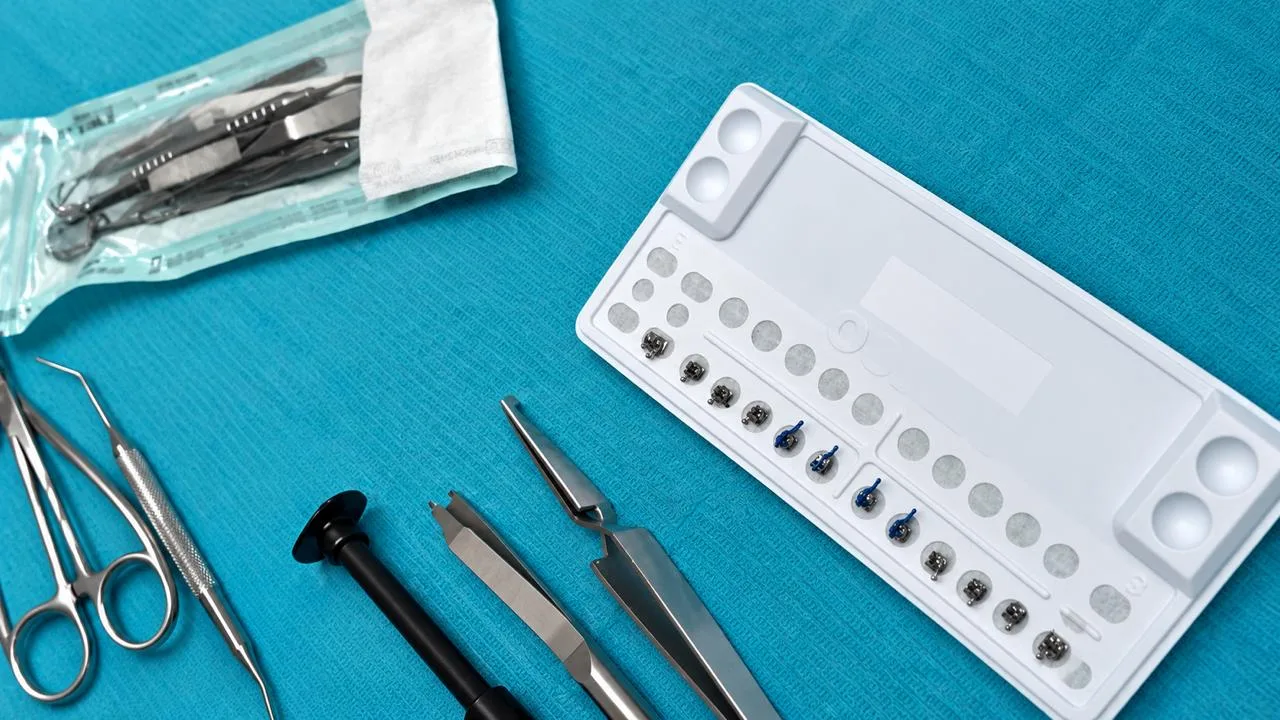
Damon Q braces – why I choose Ormco brackets
How Ormco's Damon Q brackets hold the wire without elastics, what they really improve and what research doesn't prove – explained by a dentist in Warsaw.
Related serviceOrthodontics in Warsaw Ursynów
Orthodontic treatment corrects the position of teeth and bite problems. We use fixed braces, self-ligating braces and clear orthodontic aligners.