Ultrasonic tooth extraction (piezosurgery) – how it works and how it differs from a conventional extraction
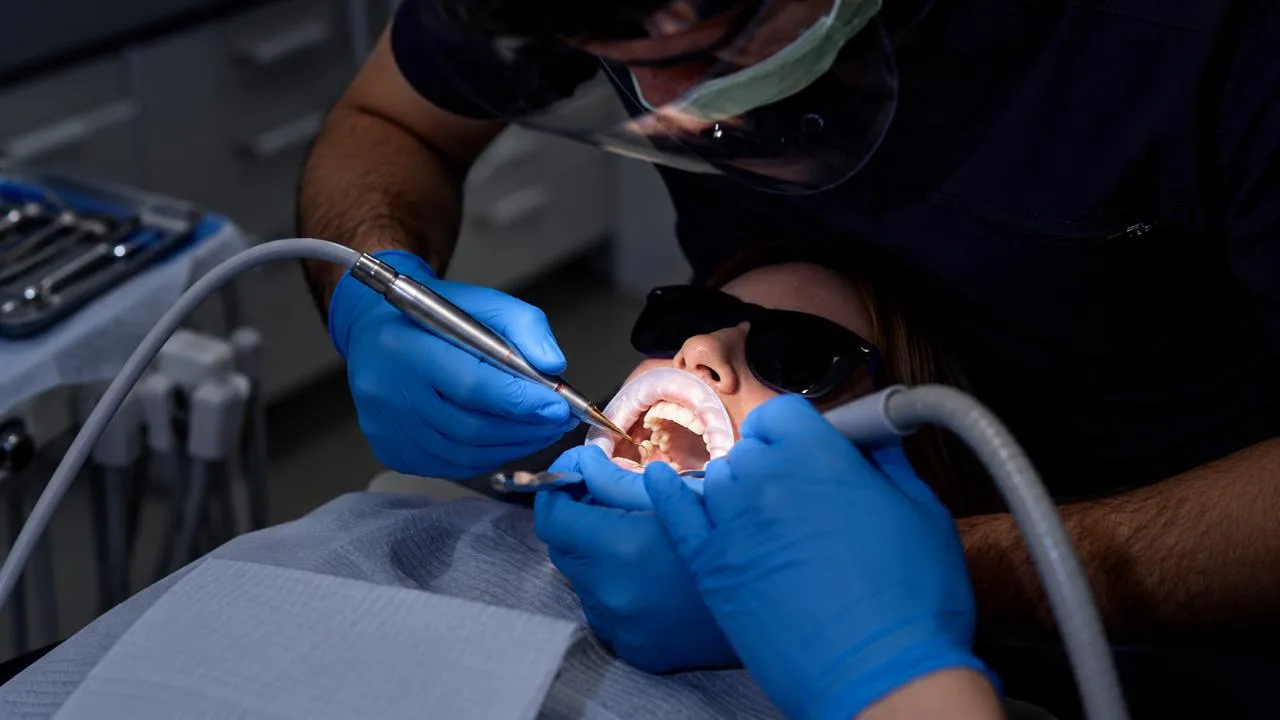
How does ultrasonic tooth extraction work? The dentist separates the tooth from the bone with a piezosurgery tip vibrating at ultrasonic frequency – it cuts bone tissue, while sparing the gum and other soft tissues far more than a drill does. The procedure usually takes a little longer than a conventional one, but in studies it often leads to less swelling and pain in the first days.
Many people fear having a tooth out more than the toothache itself: they picture "pulling", a crack and a swollen cheek. In this article we explain what piezosurgery is, how it differs from removing a tooth with forceps and a drill, what studies say about it, when it really makes sense – and when a conventional extraction is enough.
Ultrasonic tooth extraction – how piezosurgery works
A tooth does not sit loosely in the bone. It is held by the periodontal ligament – thousands of fibres connecting the root to the bone. In every extraction the dentist has to cut or stretch these fibres, and with more difficult teeth also remove some bone or divide the tooth into pieces.
In piezosurgery this is done by a tip driven by a piezoelectric crystal. An electric current makes the crystal vibrate tens of thousands of times per second, and the tip moves by fractions of a millimetre. A range of about 25–35 kHz is suited to cutting mineralised tissue such as bone. Soft tissues – the gum, a nerve, the membrane of the maxillary sinus – need a much higher frequency, so accidental contact with the tip is much less likely to cut them than contact with a drill.
During the procedure the tip is continuously cooled by a stream of saline. The water carries heat away, rinses out bone particles and keeps the field visible.
In practice, ultrasound is used to:
- cut the periodontal ligament around the root, so the tooth can be lifted out without much force,
- precisely remove a thin layer of bone around an impacted tooth,
- divide a tooth or root into parts that are easier to remove one by one,
- retrieve a fractured root or one fused to the bone.
Forceps and elevators are still needed – but usually at the very end, once the tooth has been freed and does not have to be levered out.
Ultrasonic tooth extraction vs conventional extraction – comparison
| Conventional extraction | Ultrasonic tooth extraction | |
|---|---|---|
| Instruments | forceps, elevators, a surgical drill for difficult teeth | piezosurgery tips, forceps or an elevator at the end |
| Cutting bone | a drill cuts bone and soft tissue alike | the tip cuts mainly bone, soft tissues are better spared |
| Force and pressure | a firmly anchored tooth needs more force | the tooth is freed first, so usually less force is needed |
| Time | shorter | usually a few minutes longer |
| What you feel | pressure, with a drill also noise and vibration | vibration and a hum, cool water |
| First days afterwards | depends on how difficult the procedure was | in wisdom tooth studies, often less swelling and jaw stiffness |
The key point: with a simple, loose tooth the difference can be small. The advantage of ultrasound grows with the difficulty of the extraction.
What studies say about ultrasonic tooth extraction
Most research concerns the removal of impacted lower wisdom teeth – a procedure that usually requires removing bone, so the difference between a drill and ultrasound is greatest.
- A 2018 meta-analysis (5 randomised trials, 402 patients): after piezosurgery, pain after a week, limited mouth opening on the first day and swelling after 7 days were lower than after a drill. The procedure took about 6 minutes longer on average. The authors note that larger studies are needed.
- A 2021 meta-analysis: strong evidence shows that piezosurgery makes the procedure longer, while the evidence for less pain and jaw stiffness afterwards was rated as weak.
- A 2024 systematic review (7 studies): piezosurgery was associated with less pain, swelling and jaw stiffness, but longer operating time. Results on bone density after several months were conflicting.
To be honest, then: ultrasonic tooth extraction is not a miracle method, but in more difficult extractions it often makes the first days afterwards easier. The price is a longer time in the chair.
When ultrasonic tooth extraction makes the most sense
At LumiDent, our dentists use ultrasound when it is indicated – where it brings a real benefit. Most often that means:
- Impacted and crooked wisdom teeth – when the tooth has to be exposed in the bone or divided into parts.
- Teeth close to the nerve canal or the maxillary sinus – the precision of the tip and the lower risk of cutting soft tissue matter a great deal here. The dentist usually assesses the tooth's position on a CT scan.
- Fractured roots and teeth fused to the bone – instead of levering the root out, the dentist can free it gradually.
- Extraction before an implant – after a tooth is removed, the jawbone shrinks. In a clinical study, the width of the ridge at the extraction site decreased by about half on average within a year, most of it in the first 3 months. Freeing the tooth gently helps avoid further damage to the thin front wall of bone, which makes placing an implant later easier.
- Thin bone and front teeth – where every millimetre of bone and gum matters for appearance.
If you plan to fill the gap after the extraction, it is worth discussing before the procedure. We compare the two most common options in the article implant or bridge – what to choose after losing a tooth.
When ultrasonic tooth extraction is not needed
- A loose tooth – for example with advanced gum disease – usually comes out easily, and ultrasound would add little.
- A simple tooth with one straight root – an experienced dentist can often remove it gently with standard instruments, in less time.
- When procedure time matters – for example for patients who find it hard to keep their mouth open for long.
Whatever the method, the timing depends on your health. With acute inflammation the extraction is sometimes postponed until it settles, and if you take anticoagulants or have certain chronic conditions, your doctor needs to be consulted first. Before the procedure, also tell the dentist about any implanted devices, such as a pacemaker.
Does ultrasonic tooth extraction hurt?
The procedure is done under local anaesthesia, just like a conventional extraction. During ultrasonic tooth extraction, patients usually feel:
- a gentle vibration and a quiet, high-pitched hum,
- cool water, which is suctioned away continuously,
- light pressure at the end, when the dentist lifts out the freed tooth.
After the procedure, once the anaesthetic wears off, pain and swelling may last a few days – longer after an impacted wisdom tooth, up to about a week. The dentist will tell you which painkillers to take. If you are anxious about the procedure itself, say so at the consultation – the dentist will explain every step before starting.
Ultrasonic tooth extraction step by step
- Consultation – examination, X-ray, and often a CT scan for impacted teeth. The dentist explains the procedure, possible risks and the price.
- Local anaesthesia.
- Access to the tooth – with a simple tooth, cutting the ligament around the neck is enough; with an impacted tooth the dentist makes an incision and lifts the gum.
- Ultrasonic work – freeing the root, and if needed removing a thin layer of bone or dividing the tooth.
- Removing the tooth – with forceps or an elevator, usually without much force.
- Cleaning the socket, and stitches or a material that supports healing if needed.
- Written aftercare instructions and a check-up, usually after 7–10 days, when stitches are removed.
Healing after ultrasonic tooth extraction – aftercare
The instructions are the same as after any extraction:
- do not eat or rinse your mouth for 2 hours after the procedure,
- apply cold compresses in the first days, avoid hot drinks and physical exertion,
- do not smoke for at least a few days – smoking increases the risk of dry socket,
- do not touch the socket with your tongue or fingers.
If after 2–4 days the pain gets worse instead of easing, it may be a dry socket – contact the clinic. Discomfort after a simple extraction usually passes within a few days; full bone remodelling takes several months but does not limit everyday life.
Ultrasonic tooth extraction at LumiDent
At LumiDent in Ursynów we extract teeth using the VarioSurg 2 piezosurgery unit from the Japanese company NSK. We use ultrasound when it is indicated – the dentist decides after the examination and X-ray. Ultrasonic tooth extraction has no separate surcharge: you pay the price-list fee for the type of extraction, and you know the price before the procedure. Current prices are on the page tooth and wisdom tooth extraction at LumiDent.
Surgical procedures are performed by:
- Orest Shtuka, dentist – in practice since 2000; oral surgery, implantology and surgical periodontics. Sees patients in Polish, Ukrainian and Russian.
- Rusłan Osmanov, dentist – in practice since 2016; including tooth extraction, implantology and prosthodontics. Sees patients in Polish, English, Russian and Ukrainian.
If you plan an implant after the extraction, the dentist will discuss straight away how to prepare the site – more on the page dental implants at LumiDent.
Do you have a tooth that needs to come out, or a wisdom tooth causing trouble? Book a consultation online or call +48 732 205 427. We are open Monday to Saturday, 10:00–21:00, ul. Alternatywy 7 lok. U5, 02-775 Warsaw.
This article is for information only and does not replace a consultation with a dentist.
Extractions, wisdom teeth, cysts, apicoectomies.
Questions about oral surgery
Does ultrasonic tooth extraction hurt?
Ultrasonic tooth extraction is done under local anaesthesia, so it should not hurt during the procedure. Patients usually feel vibration, cool water and light pressure. In studies of wisdom teeth, pain in the first days after piezosurgery was often lower than after a surgical drill, but the results are not consistent, and the dentist still recommends painkillers.
How long does ultrasonic tooth extraction take?
Ultrasonic tooth extraction usually takes a little longer than a conventional extraction, because the piezosurgery tip cuts bone more slowly than a drill. In a meta-analysis of wisdom tooth studies, the procedure took about 6 minutes longer on average. A simple extraction usually takes 10–20 minutes, an impacted wisdom tooth longer – the dentist gives the time after the examination.
Does ultrasonic tooth extraction cost more?
Not at LumiDent. Ultrasonic tooth extraction has no separate surcharge – you pay the price-list fee for the type of extraction, for example simple, complicated or wisdom tooth removal. The dentist decides whether to use piezosurgery based on the examination and X-ray, and you know the price of the procedure before it starts.
Can every tooth be removed with ultrasound?
Technically yes, but ultrasonic tooth extraction is not always needed. A loose tooth or a simple single-rooted tooth can often be removed just as gently and faster with standard instruments. Piezosurgery makes the most sense for impacted wisdom teeth, fractured roots, thin bone and before a planned implant.
Do you heal faster after ultrasonic tooth extraction?
The first days after ultrasonic tooth extraction are often milder: studies of wisdom teeth found less swelling and less difficulty opening the mouth. That does not mean faster bone healing – results on bone density after several months are conflicting. The socket heals over several weeks, and the bone remodels over several months.
Is ultrasonic wisdom tooth extraction safer for the nerve?
A piezosurgery tip works at a frequency suited to cutting bone, and soft tissues such as a nerve or the sinus membrane are less susceptible to it. That is why ultrasonic wisdom tooth extraction is often chosen for teeth close to the nerve canal. It is not a guarantee, though – the risk depends on the tooth's position, which the dentist assesses on a CT scan.
Related articles

Do wisdom teeth need to be removed? When to take a wisdom tooth out and when it can stay
Not every wisdom tooth needs removing. It is advised when it causes pain, infection, decay or a cyst; a healthy, cleanable wisdom tooth is often left in place.
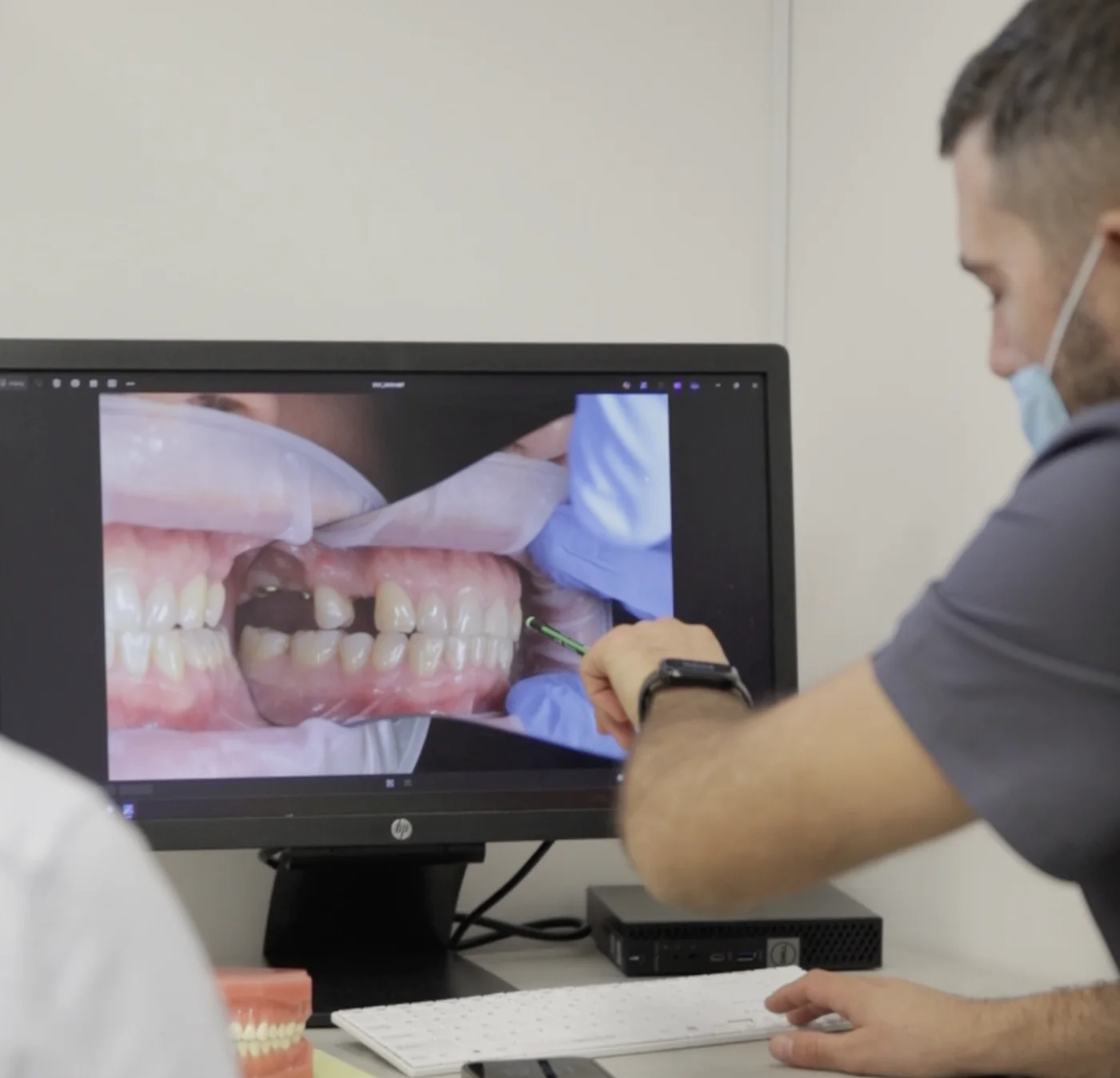
Implant or bridge – which should you choose for a missing tooth?
Implant or bridge? An implant replaces the root without grinding the neighbouring teeth; a bridge rests on them. The choice depends on teeth and bone.
- Liu J. et al. – Piezosurgery vs conventional rotary instrument in the third molar surgery: A systematic review and meta-analysis of randomized controlled trials. J Dent Sci, 2018
- Cicciù M. et al. – Piezoelectric bone surgery for impacted lower third molar extraction compared with conventional rotary instruments: a systematic review, meta-analysis, and trial sequential analysis. Int J Oral Maxillofac Surg, 2021
- Mancini A. et al. – Piezosurgery in Third Molar Extractions: A Systematic Review. J Pers Med, 2024
- Hennet P. – Piezoelectric Bone Surgery: A Review of the Literature and Potential Applications in Veterinary Oromaxillofacial Surgery. Front Vet Sci, 2015
- Schropp L. et al. – Bone healing and soft tissue contour changes following single-tooth extraction: a clinical and radiographic 12-month prospective study. Int J Periodontics Restorative Dent, 2003
- NSK – VarioSurg ultrasonic bone surgery system (manufacturer information)